

Unlocking Productivity: 6 Axis Welding Robot Applications Transforming Metal Fabrication & How to Calculate True Value
Dec 23,2025
The metal fabrication industry stands at a technological crossroads. As demands for complex geometries, higher throughput, and consistent quality intensify, traditional manual and fixed automation methods are reaching their limits. This is where the unparalleled flexibility and precision of the 6 axis welding robot are revolutionizing workshops and factories worldwide. As a leading industrial robot manufacturer in China, SZGH understands that the true value of a 6 axis welding robot extends far beyond its initial price tag, residing in its transformative ability to handle diverse, challenging applications. This guide explores these critical applications and provides a framework for evaluating the true 6 axis welding robot price to return on investment (ROI) equation.

1. The Universal Tool: Core Applications of 6 Axis Robots in Metal Fabrication
The defining feature of a 6 axis welding robot is its human-arm-like dexterity, allowing the welding torch to be oriented at virtually any angle in space. This unlocks a suite of applications that are difficult, unsafe, or impossible to automate with lesser machinery.
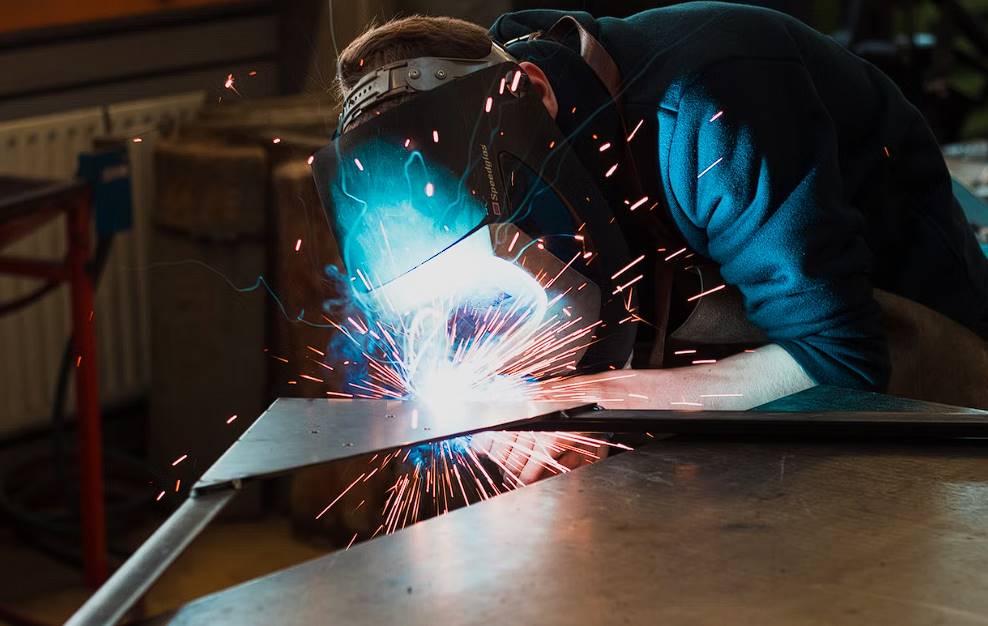
Complex 3D Welding and Fabrication: This is the premier application. A 6 axis welding robot can seamlessly weld along complex, non-linear joints on items like industrial machinery frames, agricultural equipment, and architectural structures. It maintains optimal torch angle and distance around corners and over contours, ensuring consistent penetration and bead quality where a manual welder would struggle or require constant repositioning.
High-Mix, Low-Volume Production: The flexibility of a 6 axis welding robot is a game-changer for job shops. Unlike dedicated automation, a single 6 axis robot can be quickly reprogrammed (often via intuitive offline programming) to weld completely different parts one after the other. This makes automation economically viable even for batch sizes as low as one, allowing fabricators to take on more diverse and profitable work.
Repetitive, High-Volume Welding: For shops with consistent product lines, the 6 axis welding robot delivers untiring precision. It eliminates human fatigue, dramatically increases arc-on time (often by 300-400%), and produces identical welds on the 1st and 1,000th part. This is crucial for industries like automotive components, shipping container manufacturing, and prefabricated building sections.
2. Beyond Arc Welding: Versatility Within the Fabrication Process
A key advantage of the 6 axis robot cell from a forward-thinking industrial robot manufacturer in China like SZGH is its inherent adaptability. The same robotic arm can be equipped with different tools, becoming a multi-process workstation.
Plasma, Laser, and Oxy-Fuel Cutting: By swapping the welding torch for a cutting head, the 6 axis robot becomes a precision contour cutter. It can flawlessly cut intricate shapes from plate metal, bevel edges for welding preparation, or create complex 3D cutouts, all with minimal post-processing needed.
Material Handling and Machine Tending: The robot can be fitted with a pneumatic gripper to load raw material (plate, tube) into a cutting machine, unload finished cut parts, and then transfer them to a welding fixture. This automation of material flow between processes significantly reduces manual labor and cycle times.
Grinding, Deburring, and Polishing: After welding, the same 6 axis robot can perform finishing tasks. Equipped with a grinding disc or polishing wheel, it can uniformly smooth welds, remove sharp edges, and prepare surfaces for painting with consistent pressure and speed, improving final product quality.
3. Calculating True Cost: Moving Beyond the Initial "6 Axis Welding Robot Price"
When evaluating a 6 axis welding robot, the initial 6 axis welding robot price is just one component. A comprehensive Total Cost of Ownership (TCO) analysis reveals the true economic picture and is where SZGH, as a value-driven industrial robot manufacturer in China, excels.
Direct Cost Factors:
Robot Cell Price: This includes the 6 axis welding robot arm, controller, teach pendant, and integrated welding power source.
Peripherals: Workpiece positioners (turntables, head-tailstocks), safety fencing, fume extraction, and custom tooling.
Integration & Programming: Costs for system setup, calibration, and initial programming.
SZGH's Competitive Edge: By controlling design, software, and manufacturing in our integrated China factory, SZGH offers a compelling 6 axis welding robot price without compromising on core components, often delivering 15-25% better upfront value than premium Western brands.
Operational & Value Factors (The Real ROI Drivers):
Labor Savings & Reallocation: One 6 axis welding robot can replace 1-3 skilled welders (depending on shifts), freeing them for higher-value tasks. It also mitigates the risk and cost of skilled labor shortages.
Material & Energy Efficiency: Precise control reduces weld spatter and overweld, saving on filler metal and shielding gas (typically 15-25%). Optimized cycles lower power consumption.
Quality & Scrap Reduction: Consistent robot welding drastically reduces defects, rework, and scrap—a major hidden cost in manual fabrication.
Increased Throughput & Capacity: Operating 24/7 with minimal breaks, a 6 axis welding robot can increase output by 200% or more, allowing a shop to grow without expanding floor space.
Safety & Ergonomic Benefits: Removes workers from hazardous fumes, arc flash, and repetitive strain injuries, reducing insurance costs and improving workplace morale.

4. Why SZGH 6 Axis Robots Deliver Superior Fabrication ROI
Choosing SZGH as your industrial robot manufacturer in China means investing in a solution engineered for maximum application success and long-term value in metal fabrication.
1. Application-Optimized Performance: SZGH 6 axis welding robots are designed with the rigidity and precision required for metal fabrication. Models like the SZGH-H2100-B-6 offer the ideal balance of reach (2100mm), payload (6kg—sufficient for heavy welding torches), and repeatability (±0.05mm) for fabrication tasks, all at a highly competitive 6 axis welding robot price.
2. Intuitive Fabrication-Friendly Software: We provide specialized software packages for common metal fabrication processes. Features like weaving patterns for wide fills, touch-sensing for seam finding on inconsistent parts, and offline programming that minimizes production downtime are built-in, reducing programming complexity.
3. Integrated Support from a Dedicated Manufacturer: From the initial application review at our China facility to local technical support, SZGH ensures your 6 axis welding robot cell is not just purchased but successfully implemented. Our lifelong technical service and readily available spare parts protect your investment far into the future.
Conclusion: Automating Your Competitive Edge in Fabrication
The question for metal fabrication businesses is no longer if to automate, but how and with whom. A 6 axis welding robot is the most versatile and powerful tool for this transformation. By focusing on the total value—encompassing both the 6 axis welding robot price and the immense ROI from productivity, quality, and flexibility gains—fabricators can make a sound investment.
Partnering with SZGH, an experienced industrial robot manufacturer in China, provides a direct path to this automation future. We deliver the robust technology, application expertise, and enduring support needed to turn a 6 axis welding robot into your most productive and profitable employee.
Ready to calculate the ROI for your shop?
Contact SZGH's team for a free, no-obligation application assessment and a detailed proposal that clearly outlines performance specs and total investment value.
MORE BLOG


Copyright © ShenZhen GuanHong Automation Co.,LTD All rights reserved.
